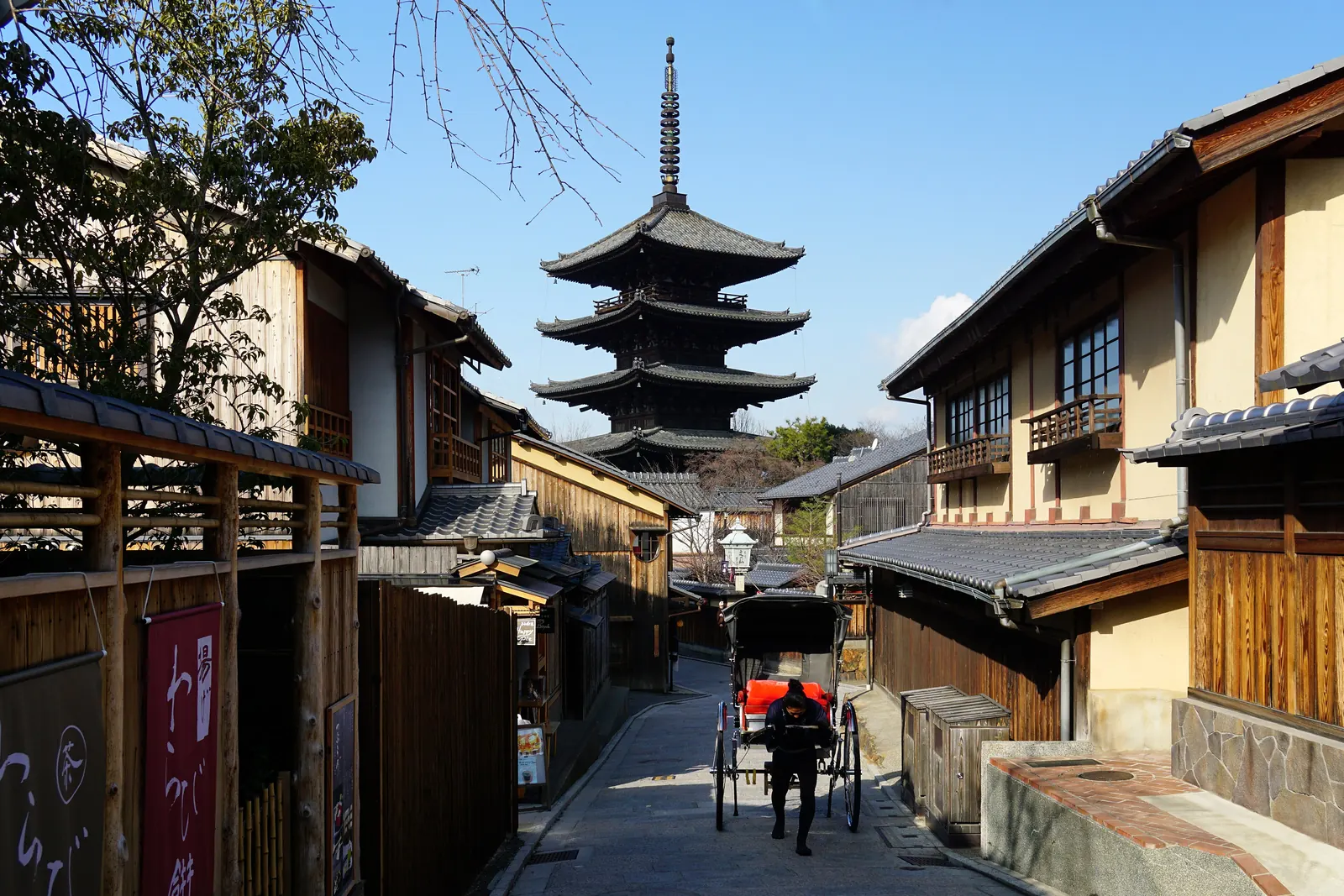
Kyoto has more temples, shrines and gardens than anyone could see in a lifetime. The mistake is to try. The city rewards those who see less, earlier and more attentively.
Begin before the city wakes
Kyoto's most famous sights are crowded by mid-morning. Arrive at opening time, or earlier where grounds open before the halls, and you will see a very different city. Stand on the veranda at Kiyomizu-dera in the early light, or walk the bamboo grove at Arashiyama while it is still silent. Plan your days around two or three places. Rest in the heat of the afternoon, and go out again at dusk.
Gardens to be looked at
The rock garden at Ryōan-ji has fifteen stones on raked gravel, arranged so that, from the viewing veranda, one is always hidden. It is meant to be sat with rather than photographed. Arrive early and sit for a while. Nothing happens, and that is the point.
The Katsura Imperial Villa, on the western edge of the city, is often described as one of the finest achievements of Japanese architecture and garden design. Its influence on twentieth-century modernists is well documented. Visits are by guided tour and require advance reservation through the Imperial Household Agency, so plan ahead.
Etiquette is part of the experience
- Remove your shoes where asked, and wear socks you will not mind being seen.
- Photography is restricted in many temple interiors. Read the signs.
- In Gion, stay out of private lanes marked as closed to visitors, and do not photograph geiko or maiko without permission.
- Speak quietly. Kyoto is a working, living city, not a set.
When to go
Cherry blossom, usually in early April, and autumn colour, usually in November, are extraordinary and very busy. Late spring and early autumn are calmer. Summer is hot and humid, and winter is quiet, cold and often beautiful.
Getting there
From Kansai International Airport, the Haruka limited express reaches Kyoto Station in about 75 to 80 minutes. From Tokyo, the Shinkansen takes a little over two hours. In the city, taxis and a private driver for the outlying temples make the most of your time. Driving yourself is not something we recommend here.
Based on research. Opening hours, reservation systems and access rules change, so check official sites before you go.
This story is based on research, including the sources listed below, rather than a first-hand visit. Prestagio does not accept payment for coverage. Spotted something out of date? Suggest a correction.
Sources
- Historic Monuments of Ancient Kyoto (UNESCO World Heritage List) · UNESCO
- Katsura Imperial Villa · Wikipedia
- Ryōan-ji · Wikipedia